TAKING 3D TO THE NEXT LEVEL

BILBY 3D prides itself as being the biggest and one of the oldest 3D printer retailers in Australia. “We are the old boys on the block, working in the industry for close to a decade now,” Lee Bilby told Manufacturers’ Monthly.

Over these years, Bilby 3D has seen advancements in material invention transform 3D technology and has adapted to the new technologies.

“What excites me the most is the material development; because this has dramatically expanded the possibilities for 3D printing. Material development and 3D printing innovation go hand in hand because the materials get developed that allow machines to do more things and machines develop more capabilities that allow them to deal with more materials,” said Bilby.

Bilby 3D has been manufacturing filaments for the past six years and has partnered with companies like Proto-Pasta in the US for manufacturing metal materials with filaments.

“We started manufacturing filaments in the very early days when the only material available for 3D printing was Acrylonitrile, Butadiene, and Styrene polymers (ABS). Being the traditional material used for injection moulding, ABS is not a great material for 3D printing because it can cause uneven shrinkage in the printed parts, so that you don’t get the desired precision.

“So, polylactic acid (PLA) was invented and has really become the backbone of 3D printing in many ways. PLA material actually does a full state change from a solid to a liquid when you print with it. PLA is actually a great material for a few reasons. From a global perspective, it is a great material because it is biodegradable, unlike ABS which is a petroleum bi-product.

“Today, we are no longer restricted to ABS or PLA plastics and we can manufacture in metals, rubber-like flexible, heat-resistant materials, through to new innovative materials like matte fibre,” said Bilby.

Raise3D’s Australian distributor

Bilby 3D is the Australian distributor for Raise3D, a global 3D printer brand whose latest printer series has won the title of “Best 3D Printer for 2018” by Make Magazine. Bilby said Raise3D’s Pro 2 would officially launch in Australia at the National Manufacturing Week expo, held in Sydney from 9-11 May.

Raise3D Pro 2 is an industrial grade components printer that combines unprecedented resolution capabilities with large build areas, onsite servicing and support, and minimal maintenance requirements.

Some key benefits and design innovations that distinguish Raise 3D Pro 2 include an electronic driven lifting dual extrusion system that is accurate to five microns (<0.005mm) and switches within less than one second between materials, wide filament compatibility (300°C), built- in air filtration, filament run-out detection and the ability to resume printing after power outage.

“Raise 3D Pro 2 model can print to a resolution of 10 microns per layer, that is previously unheard of within the industry, as the standard resolution for 3D printers is generally about 100 microns per layer,” said Bilby.

Sharing knowledge with the industry

3D printing being an emerging industry, consulting is an important part of Bilby 3D’s business. Bilbo 3D supports customers with sales, support and consulting through its wide network of resellers and offices in Sydney, Brisbane and Melbourne.

“From very early on, we at Bilby 3D saw our role as investigators. We researched and talked to industry to determine what they needed and how they could use 3D Printing. Our team draws on a diverse range of industry backgrounds, so that our clients can benefit from specialised experience both within their industry and with 3D printing.

“It is through these strong ties to industry that we have learned, developed and shared back that knowledge, to see Australian companies grow through their adoption of 3D printing,” said Bilby.

She also said that she enjoys seeing how 3D printing can make the impossible possible. “To watch an idea that never would have been viable through traditional manufacturing, become a reality because of the small scale production capabilities of 3D printing is great,” said Bilby.

“One example is DreamFarm, who utilised 3D printing from the beginning to iterate and test products on the path to traditional manufacturing. From their small beginnings 3D printing has helped them become a large international company.”

3D printing could in fact be economically feasible, particularly for small quantity productions. She said 3D printing only uses what it needs because it’s an additive manufacturing versus a subtractive manufacturing. Comparing it to CNC-ing a part where the part is cut out of a larger block of material, 3D printing only uses the exact material as needed so it becomes cheaper eventually.

“Many companies need to have parts in order to supply warranty. 3D printing allows them to only manufacture the required quantity rather than having to stock a large quantity, as is common practice through traditional manufacturing,” said Bilby.

Read more at http://www.ferret.com.au/articles/news/taking-3d-to-the-next-level-n2530018#7AvXUt8GdQswVsQq.99
AES 2018: Microgrids ensuring reliable remote power supply

Given many remote communities and Australian mine sites are moving to more renewable energy sources to reduce costs and provide environmental benefits, microgrids are becoming one of the most suitable solutions to ensure the reliable supply of power.

Microgrids can help increase the penetration of renewable energy without compromising the quality and reliability of power supply.

Having a localised source of energy, that could combine solar, battery storage and diesel, means there is less chance that supply will be interrupted, which is a key factor for remote applications such as isolated mine sites.

Mining companies are now considering how energy storage and microgrids fit into their long-term planning, in an effort to displace diesel.

Greg Allen, executive general manager at Carnegie Clean Energy directs all project operations and commercialisation activities for the company, and is currently working on The Aurora Project — a 150MW solar thermal energy project with storage — in Port Augusta, South Australia.

Allen will join a huge lineup of energy experts at the Australian Energy Storage Conference and Exhibition (AES 2018), running from May 23–24 at the Adelaide Convention Centre.

At AES 2018, Allen will explore Australian microgrid case studies that use battery energy storage technology in both network-connected and off-grid applications.

Energy systems in remote communities and pacific islands will also be explored at AES 2018 by speakers including Jiamao Wu, General Manager of Sungrow-Samsung SDI Energy Storage Power Supply, who leads the research and development, production and operation of the company.

Wu has participated in multiple “863 programs”, municipal technology innovation projects, and instructed the construction of multiple PV projects including Olympic nest, world expo and Hongqiao, as well as giving guidance to the third “Zhangjiang Hi-Tech Talents” program as a coach.

Hear from Jiamao Wu and Greg Allen, among other microgrid and energy storage experts, at the Australian Energy Storage Conference and Exhibition. To register for the conference or the free exhibition, visit www.australianenergystorage.com.au/register.

Copper to the World gets the scoop on growth trajectory

Australia’s copper sector is on the rise as global issues of energy, climate change and transportation become more urgent.

As the looming 2019 worldwide copper deficit steps closer to reality, high-calibre international copper experts from Chile, the United Kingdom and Australia will join leading copper miners and innovators in Adelaide next month for the Copper to the World conference (details here).

A sign of the times is that ongoing demand for the red metal means miners will need to produce as much copper in the next 25 years as has been mined in humankind’s history to meet growth in global industrial production and higher investment in energy infrastructure with emerging economies driving much of the growth.

As it stands, Australia is a major contributor to world copper stocks as the world’s 3rd largest exporter of copper ores and concentrates and the 7th largest producer of copper.

The South Australian Government has developed the Copper to the World program with a national and global copper audience in mind to deliver a global perspective on the future of copper, delving into trends, opportunities and developments across the copper value chain to address rising demand.

New sources of demand are moving at rapid pace. Take the increased global production of electric vehicles – containing more than three times the weight of copper compared to regular vehicles – that is expected to raise copper consumption by 300,000t alone in 2018 and 2019.

Filling the copper shortfall

Australian producers are working to supply a great big chunk of the emerging copper inventory gap, as they incorporate the latest technologies to drive success and productivity.

BHP is forging ahead with its investment plans to expand the worlds’ third largest copper deposit at Olympic Dam in the north of South Australia. This year the mine celebrated the completion of a $350 million smelter upgrade and upgraded works on the refinery, concentrator and other key infrastructure and site technology to further drive processing productivity. This follows the production of new ore from its Southern Mine Area – the expansion involving a quarter of a billion dollar investment and the scale of development and associated infrastructure work on par with five new standalone mines.

OZ Minerals has extended the life of its Prominent Hill copper mine. In April, primary approvals for its almost $1 billion Carrapateena copper gold project have been secured from the South Australian and Commonwealth Governments, clearing the way for Phase 2 of construction to commence for processing and above ground infrastructure. OZ is innovating across the board from analytics to aid decision-making in its field exploration programs to drive mining efficiencies by tapping into the latest communication and digital platforms.

Newcrest Mining, with Australian copper operations at Cadia Valley, NSW and Telfer, WA has also joined the program to share its insights into incorporating technological approaches to its operations.

More broadly Australia’s copper exploration sector is upbeat. Argonaut’s Torrens Exploration project holds promise as filling in South Australia’s copper inventory, with the company identifying 10 exploration targets, each with the potential to host an Olympic Dam-sized deposit.

Copper miners Havilah and Hillgrove will share presentations on copper mineralistion styles in a company segment at the conference.

Stretching thinking

Decision makers and thought leaders will stretch thinking across the value chain on ways to meet the growth trajectory with up-to-date analysis, case studies and technical know-how on big opportunities facing the industry.

Disruptive technologies are also bringing new opportunities for productivity and the conference will drive in-depth discussion. Speakers from CSIRO Manufacturing and the International Copper Association will discuss new technologies along the copper mining value-chain along with Hatch on advances in the smelting space.

Working towards strengthening environmental and social performance and community acceptance is an ongoing goal for the sector, to be covered by Kim Ferguson, chair of the International Council of Mining and Metals Closure Working Group.

The Discovery segment of the program will reinforce why Australia is the place to come for copper exploration – with the success rate for finding copper deposits over the past decades double the world average. The past year has seen companies bring forward a tranche of excellent drill intersections, resource upgrades, feasibility studies and advanced projects.

With slim pickings for outcropping ore bodies a challenge worldwide, improving exploration undercover remains a challenge. Answering the call to improve exploration performance will be speakers from the UNCOVER initiative and AMIRA. The UNCOVER initiative is pooling specialist expertise across the nation in a well-coordinated national effort in the ongoing effort to unearth economic mineral deposits.

View the full Copper to the World program and register here.

For further information: Charles Moore (charles.moore@sa.gov.au)

FLSmidth realignment to focus on mining and cement

fls-facility
fls-facility

FLSmidth will realign the global group from July, with focus on the mining and cement industries.

The organisation announced last week it would focus on the two industries, supported by a regional setup that would aim to strengthen customer focus and lifecycle solutions, combined with a new central digital organisation.

FLSmidth’s plan will realign the organisation from four divisions into the two aforementioned industries. From a country perspective, it will deliver an agile regional structure, according to FLSmidth.

With end markets recovering, group chief executive Thomas Schulz said FLSmidth’s customers were accelerating to invest in productivity enhancing and digital solutions.

“To support our customers’ growth, the two industries, cement and mining, will deliver integrated productivity offerings through the regions,” Schulz said.

“Our decentralised organisation will give us a strong point of entry to offer our customers key products, shorter delivery times and a strong service setup.”

The two industries will be supported by seven regions: Australia, North America, South America, Europe, Russia and North Africa, Sub-Saharan Africa and Middle East, Asia, and Subcontinental India.

According to FLSmidth, the regions will drive customer relations, sales and service for both industries. A central digital organisation will drive an enhanced, unified approach to digitalisation.

Schulz said this new way of working was a natural step forward for FLSmidth.

“We already have one of the strongest brands in the cement and mining industries. By enhancing our service level, investing in digitalisation and bringing stronger life-cycle offerings to the market, we will expand and grow our wallet share with targeted customers,” Schulz said.

Sales trends 2018: Trend 4 – Buyer behaviours, AI and the future of sales roles

The fourth sales trend from the Barrett 12 Sales Trends Report for 2018 is about buyer behaviours and the future of sales roles.

According to Gartner Research, by 2020 85% of interactions between businesses will be executed without human interaction.

Automation has already diminished the number of people required for blue collar manufacturing roles; however, with the advent of AI (artificial intelligence), big data and algorithms, we are beginning to see sweeping changes happening across the once untouchable white collar sector, including the very people-oriented roles of sales, as many buyers shift part or all of their buying journey online.

This is really worrying people and creating lots of uncertainty, and the reality is that people are at risk of losing their current roles.

This sales trend is focused on how buyers’ behaviours are changing with the rise of digital engagement and purchasing, and the impact this is having on sales roles across both B2B (business-to-business) and B2C (business-to-consumer) channels. But before we get into the details, not all is lost.

As this sales trend highlights, there is light at the end of the tunnel and not all roles are doomed. But these dramatic changes do require many of us to step up and really bring to the fore our very best human skills in communication, empathy, kindness, ideas generation, problem solving, creativity and delivering real value.

Remember, digital is still human powered

The irony is that everybody needs to know how to sell themselves to their colleagues, clients and suppliers. The skills excellent sales people possess and cultivate are the very meta-skills everybody needs today.

Professor Bronwyn Fox, director of Swinburne University of Technology’s Manufacturing Futures Research Institute, talks about the vital need for STEM (science, technology, engineering, maths) students and graduates to also be proficient in meta-skills (soft skills). This includes effective communication and the engagement of others to generate and share new ideas; the ability to bring innovations to market and actively engage; work with each other more effectively; and to sell themselves, their concepts and the future.

However, we are seeing a polarising of sales roles and we need to be ready to adapt.

When it comes to simple transactions, buyers expect to be able to do this type of purchasing online, free from human contact. However, as soon as the sales becomes complex, or less straightforward, buyers want access to real humans.

When it comes to human-to-human interaction, whether it be B2C or B2B sales, buyers are expecting a much more sophisticated response from organisations’ sales and customer care people.

Buyers want to deal with subject matter experts (SMEs), not sales people. So sales people need to become domain experts or work with their own SMEs to help buyers move forward toward their goal.

SMEs also need to learn how to sell. How do we make domain experts sales savvy? Back to the comments by Professor Fox, we need everyone to learn how to communicate and sell themselves effectively and ethically.

Let’s take a closer look at the trends and changes in the B2B and B2C channels.

Changes to the B2B buying and selling landscape

According to Andy Hoar at Forrester Research’s “Death of a (B2B) Salesman, April 2015”, 1 million sales people (22%) will lose their jobs in the US alone and one third of B2B order-taking sales jobs will cease to exist worldwide.

B2B sales job losses predicted by 2020:

  • Order takers (transactional, socialiser, visitor): 33% job loss
  • Explainers (tactical, hunter, warrior): 25% job loss
  • Navigators (relationship, gatherer): 15% job loss
  • Consultants (trusted advisor, politically aligned, add compelling business value): 10% job gain

B2B sales people must elevate to a higher plain if they are to survive. We are seeing a distinct shift away from generalist sales people to sales people becoming business and domain experts. Businesses are now needing their sales teams to transform into ‘domain experts’, or the hackneyed phrase ‘trusted advisor’, if they are to add any genuine value. This is now very evident across almost all types of business, having started with technical types companies first.

In B2B buying and selling situations, we are also seeing more and more stakeholders involved with the buying process, which is adding more complexity and time to each sales process. Coupled with this, we are seeing buyers buying in smaller amounts, adding further cost to the sales process and eroding margin.

The B2B buying and selling paradox

  • Buyers have never been easier to identify but harder to engage and sell to;
  • No one is lonely or bored, yet the value of genuine relationships is critical to effective buyer seller relationships;
  • The average transaction is getting smaller but is taking longer to sell in; and
  • 82% of sellers fail to differentiate themselves.

B2B buyers, like B2C buyers, are using omni-channels to research and make buying decisions. According to Forrester Research, 74% of business buyers conduct more than half of their research online before making an offline purchase. However, this does not mean they have not been in contact with sales people or that they have made a purchasing decision, especially if that decision is complicated and involves a range of people or processes. This is where effective B2B sales professionals can shine.

B2B sales people need to learn how to anticipate buyers’ needs and move beyond product and service. Smart companies are investing in their B2B sales people by helping them transition to human centred selling and business consulting.

Changes to the B2C buying and selling landscape

How are B2C buyers behaving?

British Telecom’s head of customer insight and futures in the BT Global Services Innovation Team, Dr Nicola J. Millard and her team, have been conducting extensive research over many years in B2C buyer behaviours and customer experience. Her latest findings reveal the following:

  • Making digital experiences easy for customers delivers business growth; move over net promoter score (NPS) and bring on net easy score (NES);
  • Businesses need to make it easier to do simple transactions, but as soon as it gets complicated they need to give their customers someone competent to talk to; there should always be a phone number so people can speak to a human being;
  • Interestingly, autonomous customers rely on other consumers (not brands) for product advice;
  • Chatbots have appeal – but with human agents checking on more complicated responses;
  • Proactive service expected by digital customers;
  • Smartphones are becoming more important in digital experience; and
  • Providing security for phone transactions will drive revenue growth;

But beware the omni-channel

  • Omni-channels shift human channels towards complexity;
  • In times of flux people want simple, easy, straight forward. If it gets complicated they want to talk to a human being. Customers want “immediate access to a well-trained employee e.g. someone to talk to on the phone or face to face ….”, especially if there is a crisis and you need a solution to a problem with a product or service;
  • Customers make decisions at each stage in the omni-channel journey based on their motivation, context and attitude; and
  • In digital channels, it’s not so much about demographics anymore it’s about context

Context is driving omni-channel behaviours

Here are the new buyer profiles that are appearing online:

Visionary: They are looking to improve their lifestyle by the purchase of a product or service (e.g. moving house or booking a holiday). They are in a positive and motivated state of mind and willing to invest time. They may even enjoy the experience. They want businesses to let them explore, research and get advice using a wide range of resources (e.g. online, webchat, face-to-face/ in-store assistance).

Utilitarian: They want to complete a routine, mundane task (e.g. paying a bill or buying everyday products and services). It is low value in terms of their time, they are not looking for the ‘wow’ factor or enjoyment. Businesses need to make the transaction fast and easy (e.g. an app or online self-service technology).

Customer in crisis: There is a crisis and they need a solution to a problem with a product or service (e.g. reporting a fault or getting advice). They might be frustrated, angry or worried. Businesses need to give them immediate and straight forward access to a well-trained employee (e.g. someone to talk to on the phone or face-to-face who can sort the problem).

Finally, the phone is not dead

The telephone has been around since 1876 and is still as vital as ever. The telephone today supports the digital experience but it does need strategic attention.

When people cannot complete simple tasks online, when things get more complex, they want to talk to a person who doesn’t leave them stranded ‘on hold’ and has the smarts to be able to deal with their issues and questions. This is relevant for both B2B and B2C sales channels more than ever before.

In previous sales trends over the last few years, we have reported on the rise of, and need for, higher levels of complex sales and service capability on the telephone, with the move away from simple transactions and service outcomes.

The telephone needs to be staffed by subject matter experts who are well paid and capable of ensuring buyers have a great experience with our businesses. No longer the graveyard for expired field sales people or ‘pleasant’ customer service people, call centres are becoming ‘expert hubs’ working in concert with the field sales teams of domain experts and SMEs.

There is a great future for sales with selling moving to a high-order function that involves all, and buyers will be getting what they want too. Expert care and attention that builds trust and, hopefully, loyalty.

Smart companies will allow the buyer and selling pendulum to find its equilibrium.

Remember everybody lives by selling something.

NOW READ: Twelve sales trends for 2018: Welcome to the state of flux

Weir to acquire ESCO for $US1.28bn

Weir has entered into an agreement to purchase US ground engaging tools (GET) specialist ESCO for $US1.28 billion ($1.67 billion).

The transaction has been approved by Weir’s board of directors and is not subject to shareholder approval.

As part of the acquisition, Weir will gain access to ESCO’s 10 manufacturing facilities, six foundries and 22 service and supply centres, in 19 countries.

Weir hopes it can leverage ESCO strong position in the GET sector to prioritise upstream growth opportunities in the minerals and oil and gas sectors; around 40 per cent of large primary mover machines across the globe utilise ESCO product.

ESCO chairman and chief executive officer Cal Collins called the merger exciting, stating: “[It] combined two premium brands and positions us to better serve our customers around the world. The merger of ESCO into Weir is also a great fit, both culturally and strategically.”

GET parts include the likes of teeth (usually for shovels and drag lines), blades, shrouds, locking systems and other edge wear parts. ESCO brands include the Nemisys lip system and Ultralok mining tooth system, which Weir intends to bring to new territories via its extensive global network.

Weir Group chief executive officer Jon Stanton called ESCO a “leading global brand” that would allow Weir to pursue new revenue opportunities.

“Together, Weir Minerals and ESCO will create a unique customer proposition as the premium provider of mission critical surface mining solutions from extraction to concentration, built on proprietary technology superior wear life and supported by an unrivalled service network.”

The mill liner that lasts longer

Rubber mill liners.

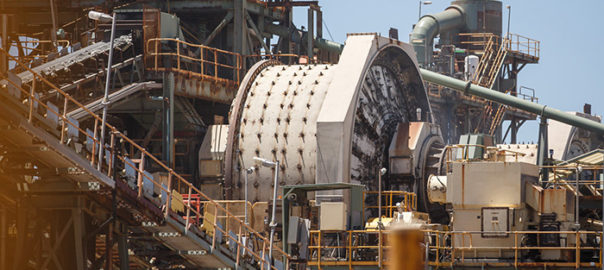
Fields results show that the new Vulco R67 mill lining rubber compound from Weir Minerals delivers an increase in wear life of 20 per cent.

With a liner that can run significantly longer, operators will experience a measurable reduction in mill downtime, installation and maintenance costs.

“This is a breakthrough in the industry; a rubber mill liner that in extensive global trials delivered on average 20 per cent longer life than comparable composite lifter bars,” Weir Minerals global product manager for mill lining systems Mathias Kuhrke states.

“This means less shut-down time for maintenance, which in this highly competitive environment represents a measurable outcome to our customers’ productivity and bottom line.”

The innovative premium rubber compound is the most wear resistant Weir Minerals has ever formulated. Operators using R67 lifter bars within their mill will not only benefit from the increase in wear life, but they will notice a measurable reduction in installation and maintenance costs as a result of a longer run schedule, according to Weir Minerals.

The making of R67 compound

Weir Minerals has been supplying the Vulco R63 rubber compound to mill lining applications across the globe for over 50 years.

While this technology performs well in most grinding applications, many suppliers are perceived by the market to offer similar rubber compounds with no real differentiation. Weir Minerals identified a gap in the market for a rubber compound that could increase the wear life of its mill liners and outlast the rest.

After extensive field research on the current rubber compounds available to the market, Weir Minerals expert engineers and material scientists developed the unique patented material that forms the R67 compound.

“Using our extensive in-house knowledge, experience and expertise, we were able to develop a new Weir proprietary elastomer that is able to withstand the severe abrasion typical in mill systems applications,” Weir Minerals materials and elastomer development manager Michael Lum says.

“Our Vulco R67 compound utilises new technology and chemistry in elastomer formulary which overcomes the limitations of more traditional elastomer compounds used in the market today.”

The Vulco R67 rubber compound is visually different from others in the market place, with green capped ends on the lifter bars.

“During the product development process we added a green pigmentation to the formulation to visually set our lifter bars apart from the competitors. Now when a mill operator sees the distinct green strip on the lifter bar, they will know they have a premium product,” Dr Lum says.

What customers think 

More than 10 trials spanning four continents have shown significant wear life improvements, in some cases exceeding a 50 per cent increase in wear life.

Weir Minerals is confident the latest R67 rubber technology will help operators across the globe get the most out of their mill.

“Our customers were at the heart of this new compound development and we worked closely with them throughout the field trials. During this time, we encouraged them to provide honest feedback on the R67 rubber compound,” Weir Minerals mill lining product manager Hayden McLean says.

“There’s tremendous value in having a trial partner that documents the downsides as well as the positive benefits. This allowed us to note which applications the new compound is best suited for, or make further improvements to the compound.”

One operation to reap the benefits of the premium R67 rubber compound is Simplot Phosphates. Operating a phosphate mine in Utah, United States, this long-standing customer of Weir Minerals agreed to trial the liner with R67 rubber.

After a nine-month trial, the liner achieved a 29 per cent improvement in wear life and had 20 per cent service life remaining when it was removed. The trial also achieved an estimated 25 per cent reduction in maintenance and reline costs.

Simplot mill maintenance supervisor Bart Smuin comments: “R67 lasts longer, which delivers less downtime and less time in the mill. That is the biggest advantage.”

Weir Minerals’ new Vulco R67 premium rubber compound is setting a benchmark for mill liners worldwide.

Coal wagon delivery bolsters Aurizon in the Hunter Valley

Rail operator Aurizon has received a newly-built batch of coal wagons at the Port of Newcastle in New South Wales.

Aurizon has described the development as a clear symbol of the continuing growth in coal exports and Hunter Valley’s coal industry employment.

Catherine Baxter, Aurizon’s general manager in NSW, said the 32 wagons in the consignment were only one part of a 284-wagon order, with each wagon having capacity to carry up to 97.8t of coal.

“These wagons will enter service for our newest customers, AGL Macquarie and MACH Energy, demonstrating the strong growth we have seen in our New South Wales Coal haulage operations since we started in 2005,” Baxter said.

“Our coal haulage has increased from 180,000t in 2005 to 48Mt in 2017, underlining the broader opportunities in the coal sector for regional employment and income generated in, and for the local community.”

The Minerals Council of NSW revealed last month that stronger coal prices have added more than 1000 mining jobs in the Hunter Valley over the past year.

“When we started out in the Hunter Valley, we had less than 10 employees and we now proudly employ more than 450 people across our operations,” Baxter said.

Australian coal exports have also continued to grow in value, with 2017 exports valued at $56.5 billion or 35 per cent higher than in 2016, according to Department of Trade and Foreign Affairs’ data.

Mineral Resources to acquire Atlas Iron

Mineral Resources (MinRes) has secured a deal to acquire iron ore company Atlas Iron through a scheme of arrangement that values the target at around $280 million.

The amalgamation of MinRes’ Pilbara iron ore assets with those owned by Atlas would deliver greater synergies and economies of scale, a MinRes announcement explained.

MinRes stated that a combined entity would drive down operating costs to ensure the consolidated iron ore business would be sustainable in the new environment of lower global prices for low-grade iron ore.

Under the proposal, Atlas shareholders will receive one new MinRes share for every 571 shares they hold. Based on the closing prices of both companies on April 4, this is a 59 per cent premium on Atlas’ value.

Atlas’ board has unanimously recommended that its shareholders vote in favour of the agreement and intends to back the deal in the absence of a superior proposal.

MinRes managing director Chris Ellison said the acquisition of Atlas, which would include a portfolio of iron ore assets and export capacity allocation at Utah Point, was on strategy for the company.

“The culture that has been developed within Atlas is an exceptionally good fit with that which has been fostered in MinRes,” Ellison said.

“The majority of the Atlas senior leadership team have been running the business for many years and their skillset, experience and intimate knowledge of the Atlas business will be an extremely valuable asset within the consolidated Atlas-MinRes business.”

Atlas’ key assets include the Abydos and Mt Webber mines in the Pilbara region. The company also owns the Corunna Downs project, which it approved for development last year until a fall in iron ore prices.

Cliff Lawrenson, Atlas managing director, said the combination with MinRes would not only protect, but also enhance the company’s business.

“The combined organisation will have the scale and financial security to support current operations, as well as providing access to capital to contemplate further development opportunities,” Lawrenson said.

“The scrip nature of the scheme also delivers a number of key benefits to Atlas shareholders, including; retained exposure to Atlas, the opportunity to benefit from potential synergies driven by the combination and greater diversification of revenue and commodity exposure.”

MinRes expects the acquisition will be completed by August this year.

In addition to the deal, MinRes and Atlas have created an alliance after they identified a range of opportunities they could progress together.

The companies will pursue several existing and potential future commodity opportunities. They will create a new vehicle, to be controlled by Atlas, that will be responsible for managing lithium and manganese operations.

MinRes will provide the initial working capital for these operations, before Atlas funds the initiative moving forward.

Dalgaranga two months from gold production

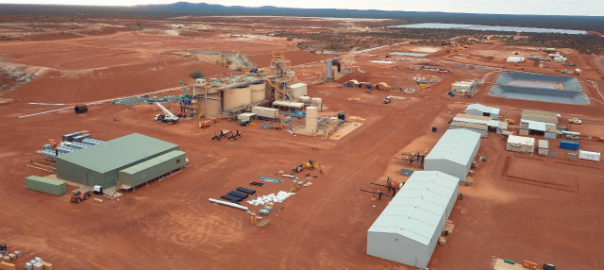
Gascoyne Resources is two months away from producing first gold at the Dalgaranga gold project in Western Australia.

The company today reported that process plant construction is 90 per cent complete and it is on schedule for wet ore commissioning and first gold in May.

Installation of the SAG mill, crusher and mechanical equipment are “well advanced”, according to Gascoyne, while electrical installation is under way and water services have been commissioned and handed over to the operations team.

“GR Engineering has progressed significantly with the design, engineering and construction of the 2.5 million tonne per annum Dalgaranga processing plant,” The company said in an ASX announcement.

“Design and engineering is complete and construction over 90 per cent complete with completion expected in around two months, approximately one month ahead of schedule.”

Dalgaranga’s mining contractor, NRW Holdings, has launched mining at the Sly Fox, Golden Wings and Gilbey deposits, with a fleet of four excavators and 18 trucks mobilised to site.

Construction of the mining workshops and associated facilities is continuing and expected to be operational by the end of this month.