The Liebherr hydrogen-powered T 264 haul truck. Image: Liebherr
A hydrogen-powered T 264 haul truck prototype developed in partnership by Fortescue and Liebherr has fired up its engines for the first time in Perth.
The successful operation of the truck, dubbed ‘Europa’, with hydrogen marks the next step in Liebherr and Fortescue’s journey to develop and supply zero-emission haul trucks for the mining industry.
“With Europa soon moving to site, Liebherr and Fortescue have taken an important step closer to their common target of developing and building zero-emission solutions for the mining industry that are both field proven and energy agnostic,” Liebherr Mining vice president of sales and marketing Joerg Lukowski said.
“This success demonstrates the incredible capabilities of two Tier 1 companies working together to develop viable technologies today that can help the mining industry move towards a decarbonised future.”
Europa contains a 1.6-megawatt battery developed in-house by Fortescue WAE, and 500 kilowatts of fuel cells. The prototype can store over 380kg of liquid hydrogen.
“Following the success of our battery electric haul truck prototype at site, we’re thrilled to now have Europa up and running on hydrogen,” Fortescue Metals chief executive officer Dino Otranto said.
“This is a huge achievement for the team and brings Fortescue another step closer to having a fleet of zero emission trucks at our sites by the end of this decade.”
Fortescue and Liebherr established a partnership for the development and supply of zero-emissions mining haul trucks in June 2022.
Liebherr began delivering the first of Fortescue’s T 264 diesel electric trucks in 2023, which will be converted to zero emission technology before the end of the decade.
“We’re aiming to transport Europa to our mining operations within the coming weeks where it will then undergo further site-based testing and commissioning,” Otranto said.
“The subsequent test results will inform our future fleet of zero emissions trucks that we’re delivering with Liebherr.”
Subscribe to Australian Mining and receive the latest news on product announcements, industry developments, commodities and more.
The Sandvik Mining and Rock Solutions rock tools team are helping to set the industry standard for circularity of rock tools and their operations.
Currently, Sandvik is one of the only original equipment manufacturers (OEMs) who recycles tungsten carbide across the world through its Carbide Recycling Program to preserve and protect remaining reserves of tungsten, a rapidly declining resource.
So far, the program has supported Sandvik to reduce its own transport CO2 footprint within this area by roughly 93 per cent, and by using recycled materials for new tools, Sandvik uses approximately 70 per cent less energy and reduces this portion of CO2 by approximately 64 per cent.
Watch the video below find out how the program supports Sandvik’s and its customers journeys towards more sustainable mining operations for future generations.
As Tradesales celebrates Australian Made Week, the company is proud to shine a spotlight on the incredible contributions of the Australian manufacturing sector.
May 20–26 is dedicated to recognising and supporting the products made in Australia and their vital role in the country’s economy.
Australian manufacturing has a storied history and continues to be a significant economic driver, providing employment to millions, fostering innovation, and enhancing the quality of life for all Australians.
Historical context and economic contribution
Manufacturing in Australia has a rich history dating back to the 1830s, when small steam engines were produced.
The sector peaked in the 1960s, contributing 25 per cent to the country’s gross domestic product (GDP) and employing almost a third of the workforce. Over the decades, the industry has seen a decline, with its contribution to GDP dropping below 10 per cent.
By 2004–05, the manufacturing industry employed 1.1 million people and exported products worth $67.4 billion. Despite these declines, manufacturing remains a crucial part of Australia’s economy, currently contributing 6.9 per cent to GDP and supporting 862,200 positions.
Manufacturing as an economic driver
Manufacturing remains a significant economic driver in Australia, encompassing various industries such as mining equipment, pharmaceuticals, and textiles.
It provides employment for over one million Australians, directly and indirectly supporting other sectors like transportation and construction.
Supporting other sectors
The manufacturing sector boosts other parts of the economy by supplying raw materials and goods, stimulating growth in agriculture, mining, retail, construction, and healthcare. This interconnection highlights the sector’s role in underpinning the broader economic structure.
An engine of economic growth
Manufacturing is vital for the Australian economy’s growth and future prosperity. It plays a crucial role in GDP and acts as an engine of growth, fostering economic stability and expansion.
The sector’s contributions to GDP underscore its importance in maintaining and enhancing Australia’s economic performance.
Innovation and research
Australian manufacturers, such as Tradesales, are at the forefront of innovation, constantly developing new products and technologies.
This drive for innovation requires significant investment in research and development which, in turn, leads to the creation of efficient and cutting-edge products that benefit consumers and enhance daily life.
Improving everyday life
Manufacturing significantly impacts daily life, producing essential goods such as food, clothing, electronics, and vehicles. The availability of these products ensures a convenient and efficient lifestyle for Australians, underscoring the sector’s role in improving quality of life.
Economic resilience and job quality
Despite a reduction in its share of GDP and workforce, manufacturing remains a resilient sector.
It is the fourth largest sector in terms of employment, with most jobs being full-time and offering benefits like paid leave. This resilience in job quality highlights the sector’s capacity to provide stable and quality employment.
Future prospects
The future of Australian manufacturing looks promising with policies like the Future Made in Australia initiative, which focuses on transitioning to net-zero emissions and developing industries like green hydrogen and critical minerals refining.
These initiatives aim to make Australia a leader in sustainable manufacturing practices. Trends such as automation, micro-training, and a focus on sustainable energy practices are also shaping the sector’s future.
Manufacturing in Australia has undergone significant changes but remains a cornerstone of the economy. Its ability to adapt and innovate provides substantial economic benefits and quality employment.
As the sector embraces new technologies and sustainable practices, it is poised to play an even more critical role in Australia’s economic landscape.
Support Australian manufacturing
To support this vital sector, consumers are encouraged to buy Australian-made products. Research indicates that if every household spent an additional $10 per week on locally made goods, it would inject almost $5 billion into the economy annually, creating 9,000 new jobs.
The commitment to Australian-made products is strong, with 91 per cent of Australians wanting more local options and 72 per cent planning to purchase more locally produced goods in the next year.
For those looking to engage directly with Australian manufacturing, Tradesales manufactures heavy-duty storage systems, workshop equipment and relocatable site solutions for heavy industries such as mining, construction, and defence, ensuring products are made to high standards, on time, and within budget.
By supporting such businesses, individuals can contribute to the growth and sustainability of Australia’s manufacturing industry.
New report on aggregate usage revealed. Image: Enrique del Barrio/stock.adobe.com
New research from the Mineral Products Association has revealed that the usage of recycled construction aggregates has reached a record high in Britain.
The new report from the Mineral Products Association, which represents the major aggregate firms in Britain, shows that the total volume of recycled and secondary materials reached a record 73.5 million tonnes in 2022.
“The substantial contribution of recycled and secondary aggregates to total supply is a huge but largely hidden success story for the industry. Aggregates producers have been recycling suitable construction and demolition waste for years to meet our construction needs as efficiently and sustainably as possible, whilst meeting stringent technical standards,” MPA director of economic affairs Aurelie Delannoy said.
“As we look ahead, further progress in recycling can be anticipated, supported by the major investments that have recently taken place in the extractive sector. However, it is important to recognise that the availability of recycled aggregates is inherently tied to demolition activity and the availability of suitable waste materials.
“With increasing demands to achieve climate neutrality by 2050 and address key infrastructure and housing needs, primary aggregates extraction will remain essential for meeting the majority of demand over the long term.”
Total aggregates supply (million tonnes) in Great Britain, 2022. Image: Mineral Products Association (MPA)
In the report ‘Construction Aggregates Supply in Great Britain: Primary, Recycled and Secondary Aggregates in 2022’ the MPA demonstrates that non-primary materials accounted for over 30% of the country’s total demand for aggregates (which stood at 241.8 million tonnes in 2022, the biggest flow of materials in the economy).
The data illustrates Britian has one of the highest recycling rates in the European region. The breakdown of this figure of this figure showed 60.3 million tonnes of recycled aggregates was compromised of construction, demolition and excavation wastes (CDEW) such as concrete and brick rubble, old rail track ballast and earthworks spoil. Meanwhile, 5.8 million tonnes of asphalt planings were reused in road networks in 2022.
“Whilst the construction industry may well be the country’s largest source of waste, MPA members have become proficient in recovering materials arising from build development and processing them so they can be put back to good use elsewhere in construction,” MPA’s executive director for planning and mineral resources Mark Russell said.
“The most efficient way to process and reuse these materials is close to where they are sourced to minimise transport, and the bureaucracy of the planning and permitting system is often a barrier to delivering the most efficient solutions.
“That said, there are major investments taking place to improve the quality and availability of recycled and secondary materials, giving developers and contractors the confidence to specify them. Even the small amount of soft inert waste that cannot be turned into aggregate is put to good use in quarry restoration and land remediation.”
MACA has locked in a major contract at Atlas Iron’s Miralga Creek iron ore project in the Pilbara region of Western Australia.
The mining, civil and mineral processing contractor will provide mining and drill and blast services at the mine, continuing a 15-year partnership between the companies.
The contract announcement was made by Thiess, which has owned MACA since 2022.
“This contract will see the business further embed our presence in the Pilbara’s rich iron ore industry, all while working alongside a client that has played a large role in MACA’s expansion,” Thiess Group executive chair and chief executive officer Michael Wright said.
Miralga Creek becomes MACA’s second active Atlas Iron contract, situated in close proximity to Sanjiv Ridge, a project awarded to MACA in June 2020 providing infrastructure, drill and blast, and load and haul services.
Operating at the project since mid-March under a letter of intent, MACA has since mobilised a fleet of excavators, trucks, drills and associated support equipment, as well as a 45-person workforce to ensure minimal operational downtime.
“Since 2009, we have proudly worked with Atlas Iron, consistently delivering our capability and flexibility to meet production goals.” Thiess Group executive – Australia West David Grieg said.
“Securing the Miralga Creek contract is a strong signal of MACA’s capability in delivering our promise of performance in a range of highly technical applications.
“With over 20 years’ operating in the Western Australian landscape, new contracts with both existing and former clients remain the ultimate testimonial of our performance.”
Subscribe to Australian Mining and receive the latest news on product announcements, industry developments, commodities and more.
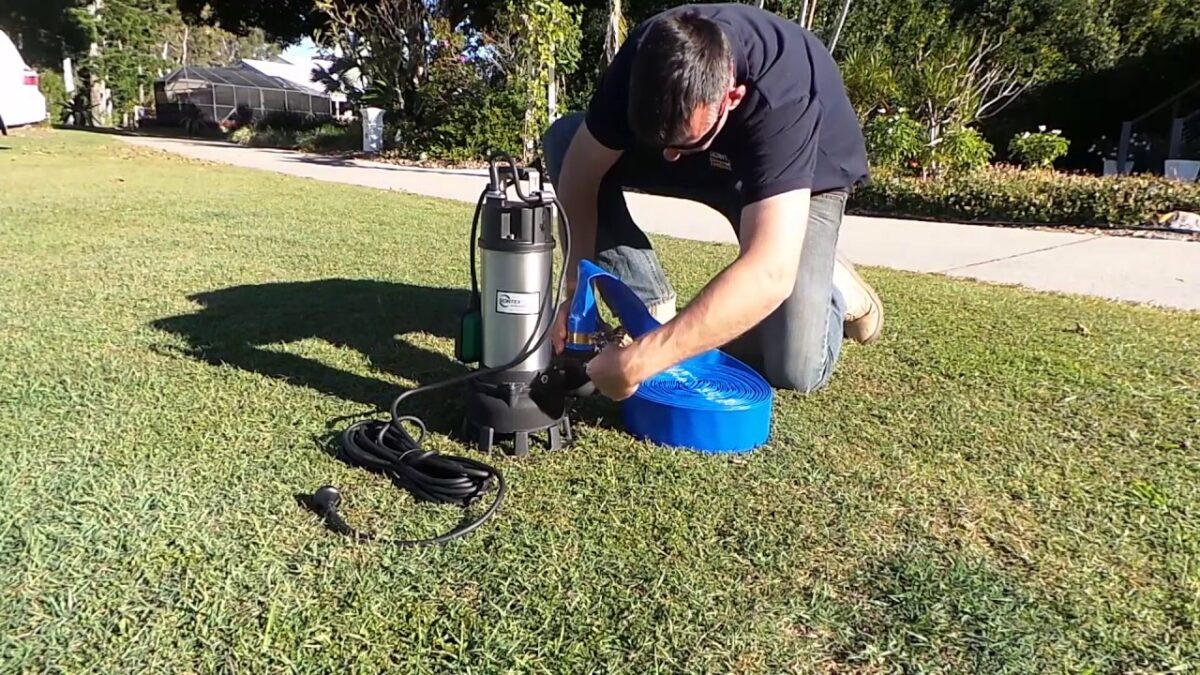
These 240 volt high flow submersible pumps are ideal for a difficult working environments where a powerful submersible pump is required. Perfect for construction sites, builders, farming and residential home owners. Move dirty water fast for any application.
Heavy Duty Submersible Centrifugal Water Pump with Float Switch
These high flow submersible water pumps are designed with a open impeller which makes them less prone to blockages and well suited for use with dirty fluids including light mud, sewage and even water containing some debris.
Paddock offer the most powerful pumps we’ve seen capable of running from a standard household 10 amp plug socket. These pumps are fitted with large heavy duty motors and are designed to move water fast.
These pumps come standard with a float switch fitted. When the float is in the upright vertical position, the internal ball drops inside the float and closes the circuit to activate the pump. When the fluid level drops, the float changes its orientation and stops the pump. The length of the float cable can be adjusted via the integrated cable clamp to custom configure the on/off trigger points if desired. Some customers not wanting the float switch have reported success in simply zip tying the float switch in the vertical ‘on’ position and this allows the pump to run continuously independent of fluid level.
Each pump includes a high quality silicon carbide mechanical seal with oil separation chamber ensuring water remains about pf the motor. This design results in long term reliable operation. Maintenance is a dream as the wet end pump can quickly be separated from the electric motor. The pump motor is constructed with 100% pure copper wire windings which helps it to run cooler and last longer for the user.
The pump is suitable for fresh, sewage or sea water*. Popular uses include water supply and disposal, home pressure pumping, irrigation, dairy, farming, fishery, residential pump, construction and building sites, sewage, grey water and flood management.
Submersible pumps rely on the fluid they’re submerged in to cool the powerful motors. Unlike non submersible pumps there is no fan to blow cooling air over a finned motor. Therefore it is important to ensure the pump is not allowed to run for extended periods of time out of the water. The included float switch is configured such that the pump will turn off before the water level drops below the motor. When installing these pumps, ensure the pit is large enough that the float switch can not become jammed in the on position as this can lead to the pump running dry eventually overheating the motor. Each motor includes thermal cutout protection as standard to save the pump from damage if it was accidentally allowed to run dry.
Submersible Pump Features:
5m lead with standard plug end
Low Noise, smooth operation
Compact Construction
12 month warranty
Pump Specification
SPS1500AF
SPSP2200F
Voltage
240V Single Phase
240V Single Phase
Power
1500 W
2200 W
Motor
Continuous Duty Cycle when submerged
Continuous Duty Cycle when submerged
Flow Rate
466 LPM
700 LPM, 42 m3/hr
Inlet / Outlet
2″
3″
Pressure
18m ~180kPa, 26 psi
17m ~170kPa, 25psi
Max. Fluid temp.
60°C
60°C
Compatible Fluids
Water, Sea Water*, Sewage
Water, Sea Water*, Sewage
Approx. Weight
29 kg
33 kg
Approx Dimensions
270x290x600mm
270mmx290mmx700mm
Construction
Stainless steel motor casing
Open impeller design
Stainless steel shaft
Silicone Carbide Mechanical Shaft Seal with secondary oil seal
Stainless steel motor casing
Open impeller design
Stainless steel shaft
Silicone Carbide Mechanical Shaft Seal with secondary oil seal
Protection
Thermal **
Thermal **
Warranty
1 yr
1 yr
*Long term use in sea water may lead to corrosion which is not covered by warranty. Whilst the pump will work with sea water it is not recommended for permanent installations in corrosive salt water environments.
** Whilst the pump motor includes thermal cutout protection, this should not be used to control fluid level. Allowing the pump to run dry repeatedly only to over-heat and stop via the thermal cutout protection will significantly reduce the operating life of your pump and this type of damage is not covered under the products warranty. The pumps float switch should be used to control fluid level and this is configured such that the motor is always submersed and cool.
The PNG Expo will take place in Port Moresby this year. Image: andriano_cz/stock.adobe.com
From new mines to critical minerals, the Papua New Guinea resources sector is thriving with potential.
The 2024 PNG Industrial and Mining Resources Exhibition and Conference (PNG Expo) will be the premier event for industry professionals to discuss the latest developments in the Pacific nation.
Quarry takes a look at the top talking points.
Critical minerals
With its vast reserves of copper, cobalt, nickel and mineral sands, PNG is well-placed to help provide the critical minerals necessary for the world’s transition to net-zero.
Mayur Resources has been working to get its lime and mineral sands project up and running to help strengthen supply.
The company’s Central Lime Project is located along Papua New Guinea the coast near Port Moresby and was recently bolstered by a $9.4 million funding commitment.
“This capital injection is a vote of confidence in our ability to deliver high-value, sustainable projects,” Mayur managing director Paul Mulder said.
“It enables us to continue progressing the early development works at our Central Lime Project, setting a solid foundation for the commencement of construction.”
Mayur is aiming for the Central Lime Project to become Asia-Pacific’s first carbon-neutral cement and lime producer.
It’s this sort of innovative planning that will be on show at the PNG Expo in Port Moresby from July 3–4.
“PNG Expo will be the platform to engage and drive transformative changes towards a sustainable future,” show director Lauren Chartres said.
“Our mission is to equip the industry with the right tools.”
The conference will showcase experts from across the mining and resources sector. Image: stock.adobe.com/Adam Constanza
Education and training
The name Ok Tedi Mining (OTML) often goes hand-in-hand with education, training and apprenticeship opportunities in Papua New Guinea.
The first three months of 2024 have seen OTML deliver over $121,000 in scholarships to university students, welcome 22 new apprentices, and pledge to donate vehicles and an analytical chemistry laboratory facility at PNG University of Technology.
The scholarshipshave seen 10 third-year university students supported with full tuition and boarding for the year, as well as a book allowance and stipend, travel assistance, industrial training and an automatic offer into the two-year graduate development program upon completion of studies.
“The program aims to assist university undergraduate students with school fees and other associated costs while ensuring OTML maintains an industry-institution relationship with respective universities that provide graduates into its training programs and workforce,” OTML said.
Elsewhere in the resources sector, Kumul Petroleum’s training entity Kumul Petroleum Academy is building a new facility to expand its coaching and employment capabilities.
“We are passionate about investing in programs and projects that will upskill and develop our young Papua New Guineans so that they are ready for the projects that are coming online now,” Kumul Petroleum managing director Wapu Sonk said.
The Kumul Petroleum Academy is expected to open within two years and will have the capacity to train 350–400 trainees.
Current projects
The restart of the Porgera gold mine has been in the news a lot recently, and for good reason.
The Porgera mine, owned by Barrick Gold, is located in the Enga Province of Papua New Guinea, about 600km north-west of the capital of Port Moresby.
The Papua New Guinea Government backed the restart throughout 2023 and the mine was able to pour first gold in February 2024, with Prime Minister James Marape on hand to witness the milestone.
“Today marks a significant moment where we are witnessing New Porgera Limited’s first gold pour and stamping of the first gold bar,” Marape said at the time.
“This first gold pour is the outcome of the [Papua New Guinea] Government, New Porgera Limited, Enga Provincial Government, and mine-affected communities working together. This is teamwork.”
Enga landowners, the Enga Provincial Government and the state will receive a combined equity share of 51 per cent from Porgera. A three per cent royalty has also been included for landowners, a step up from the previous five per cent.
In the energy sector, the PNG LNG project is ramping up, with Santos selling its five per cent stake to Kumul Petroleum.
The $US19 billion liquified natural gas project is an integrated development that includes gas production and processing facilities that extend from the Hela, Southern Highlands, Western and Gulf provinces to Port Moresby in Central Province.
As Papua New Guinea’s national oil and gas company, Kumul is already an existing partner in the PNG LNG project.
These key projects, and much more, will be among the top discussion points at the 2024 PNG Expo, the safest and strongest place to network, share ideas and learn more about what companies are doing in these spaces. •
Drilling operations at the Springdale graphite project in WA. Image: International Graphite.
International Graphite has welcomed the US’ decision to impose tariffs on a range of Chinese imports, including batteries, battery components and parts, and critical minerals.
Earlier this week, the US Government announced the tariff rate on natural graphite and permanent magnets from China will increase from zero to 25 per cent in 2026, and the tariff rate for other critical minerals will increase from zero to 25 per cent in 2024.
The tariff rate on electric vehicles (EVs) will also increase from 25 per cent to 100 per cent in 2024, meaning EVs that use Chinese graphite for battery components will not be eligible for the Inflation Reduction Act (IRA) tax incentives.
The IRA legislation encourages innovation by giving firms various demand- and supply-side incentives to invest in developing and deploying clean energy technologies, while helping the country transition to net-zero.
“Despite rapid and recent progress in US onshoring, China currently controls over 80 per cent of certain segments of the EV battery supply chain, particularly upstream nodes such as critical minerals mining, processing, and refining,” the US Government said.
“Concentration of critical minerals mining and refining capacity in China leaves our supply chains vulnerable and our national security and clean energy goals at risk. In order to improve US and global resiliency in these supply chains, (the US Government) has invested across the US battery supply chain to build a sufficient domestic industrial base.”
International Graphite said graphite from its Springdale project in Western Australia will be free of US tariffs and Springdale customers will be eligible for IRA incentives as per the free trade agreement between Australia and the US.
“The timing of US tariffs coincides with the dates we expect to bring our Springdale mine into production,” International Graphite managing director and chief executive officer Andrew Worland said. “It is also the point at which world markets are expecting graphite demand to exceed supply.
“Our plan for a vertically integrated mine to market graphite business from Western Australia, fits perfectly with the goals of the US to reduce its reliance on China and secure other sources of trusted, reliable graphite.
“We have shown that Springdale has the potential to be a multi-decade, low-cost operation that will produce high quality graphite concentrates specifically for lithium-ion batteries.”
The Springdale graphite project in located in the Ravensthorpe region of WA. Since International Graphite took ownership of the project in 2022, it has grown to become one of the top 15 graphite deposits in the world.
K-AllShelter conveyor belt covers are manufactured using a wide range of optional materials. Image: Kinder Australia
Kinder Australia is helping quarries keep dust down while protecting material from the elements with its K-AllShelter Capotex covers.
Quarries can be a harsh and unrelating place for conveyors and the material they move.
Being exposed to the Australian elements can invite disaster. Rain adds more complications to the mix, as adding water to quarried material can quickly alter the consistency and lead to screen blinding, clogging, chute hangups and blockage.
Heat and humidity can interfere with material quality and flow, while the sun’s harsh ultraviolet rays can shorten the belt life.
Strong winds can blow material off the belt, and in some cases, even flip the belting entirely. This also has the added problem of creating dust emissions.
Peter Laskey, a Kinder Australia field application specialist, told Quarry that dust prevention is becoming even more important in the sector.
“We are seeing quarries around the country looking to minimise dust as much as they can,” he said.
“Regulations are strict and it’s important to ensure the safety of the nearby workforce.”
One Victorian Quarry reached out to Kinder Australia to rectify its onsite dust issues. The site had recently improved one of its transfer points to deal with dust that had been building up.
However, following the transfer point upgrade, dust was being redirected to a different point of the conveyor system. Two vertical shaft impactors were frequently creating excessive dust emissions, particularly around the front of the transfer site, during the start up and production phase.
Baffles were previously used, but this solution was not enough to combat excessive dust emissions during normal production.
K-AllShelter features:
• Cost effective
•Self-supporting (no support structure required)
•Accessible from both sides of the conveyor
• No sharp edges
• Build-in inspection points available
•Site specific wind load report available to confirm compliance to Australian Standard
Laskey said the K-AllShelter Capotex conveyor cover was the proven, cost-effective dust suppression solution.
“The K-Shelter Capotex conveyor cover was chosen for its lightweight, high strength and easy to install features. The covers feature a dust-tight seal that prevents dust from escaping and causing problems on site.
“Future conveyor maintenance is made simple and hassle free due to the conveyor covers being hinged on both sides and due to the Caposafe Service Prop. The prop holds the cover and lets the maintenance team get access easily.”
K-AllShelter conveyor belt covers are manufactured using a wide range of optional materials and engineered as a waterproof, durable barrier. They can be custom made to suit all belt widths and models.
They help to provide durable protection from extreme environmental elements and help to control moisture levels of conveyed materials. Covering the conveyor is also beneficial to operators, improving safety by covering the moving parts.
Laskey said the dust emissions were eliminated following the installation of the covers, as the dust would settle onto the belt instead of becoming airborne.
“The customer was very happy – they saw how well it contained dust and decided to continue it to the head pulley. Once they saw how effective it was, they decided to go for the whole length of the conveyor,” he said.
“This is a classic example of how Kinder Australia works to find the right solution for a site. Our team looked at one part of the system, got that right, then moved to another. It’s not about isolating the symptom – we want to rectify the problem itself.
“We’re a solutions-based company with a large engineering base. Kinder is always working on new ways of solving problems that work best for each site.” •
AGG1 co-hosts with World of Asphalt. Image: Steven Franklin
Steve Franklin, founder of Eltirus, attended the AGG1 Academy & Expo in Nashville, Tennessee. He reports what he found at a key event for the North American aggregates industry.
Co-hosted with the World of Asphalt, the AGG1 Aggregates Academy & Expo witnessed a record-breaking attendance.
More than 15,800 industry professionals participated in the three-day event, marking a significant 38 per cent increase from the previous record of 11,400 attendees in 2022.
This surge in attendance underscores the event’s growing importance and influence within the aggregates and asphalt industries.
The show not only set new records in attendance but also expanded its reach in terms of educational sessions and exhibitors, offering more than 120 educational sessions and featured over 400 exhibitors across 18,000 square meters of place with attendees from all over the world, including as far as Australia, New Zealand, the UK, and Europe to engage with the latest innovations, technology, and education in the field.
Who was there?
The exhibitor area was well represented by equipment manufacturers and equipment.
In terms of aggregate equipment suppliers, all the companies that you would expect to be there were – Caterpillar, Epiroc, Develon, HD Hyundai, John Deer, Komatsu, Liebherr, Sandvik, Volvo, and more.
On the technology side, I saw Carlson, Inform, Loadrite, Price Bee, Topcon (to name but a few).
I also ran into a range of people from companies that I know who were not exhibiting, but nevertheless there catching up with customers and prospects.
Aggregate equipment suppliers were at the event, including Liebherr. Image: Steve Franklin
Electric and autonomous equipment
I was much disappointed to see very little in terms of this type of technology. The only notable machine was a small electric wheel loader. The big news in the North American market in terms of autonomous operation is of course the Luck Stone Caterpillar trial at their Bull Run quarry, however I didn’t hear any discussion of this at the show.
Automated environmental monitoring
Monitoring of environmental performance can be a pretty time-consuming affair when done manually. I have often thought there should be an easier way of doing things and I saw just that at AGG1.
Sauls Seismic provides a fully managed service that provides, installs, and manages IoT sensors that measure ground vibration, rainfall, water flow and water level, pH, dissolved oxygen, turbidity, conductivity, weather and dust deposition.
I have never seen a company that has all the environmental sensors that a site might need, installs, and maintains them and provides access to the data in a consistent format through a public API. Is there such a service in Australia – if so, please let me know.
Inventory management
Using drones for stockpile management is a big step up from manual measurement in terms of accuracy.
However, I am sure that you will also know that the approach can result in variable outcomes at time.
All it takes is someone to start changing densities, mis-pick the material type, alter the elevation of a stockpile base or boundary for you to see big swings in tonnages. In short, it is a good approach, but not an infallible one.
Enter Stockpile Reports (SR). Famous for their app that allows you to measure a stockpile using your iPhone (and more recently using the new Apple Vision Pro VR goggles), they also offer an enterprise inventory management service. So, what do I mean by inventory management service and how is this different to the way that we are used to measuring stockpiles with say Propeller or DroneDeploy?
Stockpile Reports is the only automated, controlled, and scalable third-party solution for managing bulk materials inventory that provides third-party verification and stockpile measurement accuracy scoring. Whether the imagery is captured with planes, drones, phones, or installed cameras, their patented technology ensures precision with reports that auto-correct obstructions, provide an objective surface score, and measure confidence in toe and base calculations.
The thing that really makes it stand out is the fact that your stockpile volumes are verified, and SR stand behind the numbers.
They also provide API access to the data and sensors that can provide real time analysis of stockpile volumes using fixed cameras that help identify potential stock-outs. It is amazing technology.
More than 15,800 industry professionals participated in the three-day event. Image: Steve Franklin
Aggregate and concrete plant scheduling
I think we can all agree that keeping quarry production and sales teams can sometimes get out of sync, with less than desirable outcomes.
Plant Demand aims to help alleviate this problem by putting in place a system that helps to keep everyone on the same page by helping to improve stock level visibility and reduce potential stock-outs. Increasingly common in North America, I think it has the opportunity to help businesses in our region too.
Logistics optimisation
Whether you deliver ready-mix concrete, cement, aggregates, asphalt, or any other building materials, effective transport planning can mean the make a big difference to the bottom line. Inform, a German company provides a remarkable AI based system that claims to increase truck fleet performance up to 30 per cent by calculating an optimised delivery schedule and fleet configuration for the next day based on service levels.
I am sure that to anyone who runs a fleet of trucks, 30 per cent improvement sounds like a big number. With this in mind, I was looking to talk to people at the show who had experience of Inform and could validate the sort of improvement that they are promoting.
One former managing director of a European aggregates operation who had experience of the system confirmed that they had indeed seen improvements on the order of 25-30 per cent in fleet productivity through the use of Inform and that its approach to fleet sizing or redistribution, truck right-sizing, fleet size/mix, haulage contracts made a profound difference to how they ran their fleet.
Quoting and sales price optimisation
Price Bee was very kind in allowing us to co-show with them at AGG1. I was amazed by the interest their product generated at the show, with many, many people stopping by to see their integrated quoting and pricing system for aggregates, concrete and asphalt.
Having seen the system from its inception many years ago, it was very interesting to get a deep dive into the software and how it can help providers. Even more so was to see the progress they have made into the North American market with a number of big-name customers.
If you haven’t seen Price Bee, it provides a fast, effective way to quote aggregates, concrete and asphalt (if you are using Excel for quotes, you must see this), but it also integrates pricing optimisation into the quote to ensure that different customers are charged the right pricing tiers and works to help you maximise price across the board.
Fleet management
Last but not least, great to see a home-grown technology solution at the show – Komatsu’s Smart Quarry Site system which was well represented and created a lot of interest.
Summary
Probably the most noticeable trend at AGG1 this year was the focus on digital transformation. The vast majority of producers I spoke to have an accelerated interest in this area and were working on projects to change how they did business. •