Stellar Resources has successfully raised millions to advance its flagship Heemskirk Tin Project in Tasmania.
The company received commitments for approximately 409 million shares at an issue price of $0.022 per share, for a total of $9 million, per a company report.
Proceeds will be targeted towards development study costs for Heemskirk, which Stellar said is the highest-grade undeveloped tin resource in Australia and the third-highest globally.
Funds will also support due diligence on surrounding infrastructure options and exploration at the highly prospective East Renison Project. This new funding, combined with a recent $2.9 million from option exercises, brings Stellar’s total capital raised in recent months to $11.9 million.
“We are very pleased with the strong support received for this placement from both existing shareholders and new investors, enabling the board to increase the amount raised from what was originally sought,” Stellar managing director Simon Taylor said.
“The funds raised, together with recent option conversions, significantly strengthen our balance sheet and position Stellar to advance the Heemskirk Tin Project towards development, as we aim to become a global top-10 tin producer.”
According to Stellar, the strong investor interest stems from tin prices trading around $US36,000 per tonne, driven by demand from the electronics and renewable energy sectors.
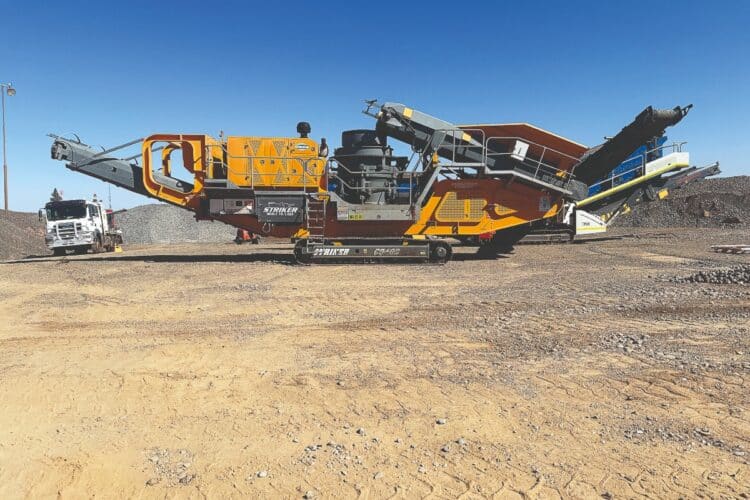
The MACAR Group has turned to a Striker CQ400 cone crusher from Onetrak to handle a challenging mining project.
The MACAR Group, a Western Australian crushing and screening company operated by a husband-and-wife team, was looking to expand into the gold processing industry.
After landing a key contract, the company had a tight timeframe to get a crusher up and running.
MACAR Group owner Matt Kelly said it was a challenging application, but Striker distributor Onetrak was able to help find the right solution.
“This is our first purchase, but we’ve got a good relationship with Striker,” Kelly said.
“With my background as a boilermaker and fitter I’m familiar with Striker machinery, and their ease of use and accessibility has always stood out.
“We were looking for a cone crusher and Striker couldn’t supply us a machine in the timeframe we had, so they put us on to Onetrak and they’ve been fantastic.”
At the beginning of September, a Striker CQ400 cone crusher joined MACAR Group’s fleet and is now processing scats at a gold processing plant in Meekatharra.
It was the first Striker machine to join the fleet, and the first to be supplied by Onetrak.
MACAR Group has been operating across WA since 2021. After purchasing a reclaimer screen, the next step was to expand within the Goldfields and Murchison regions of WA.
“We’ve done crushing at the Granny Smith mine for Gold Fields and we’ve just started a project for Westgold,” Kelly said.
“We’re pushing hard in the gold sector at the moment.”
With a long-term plan to build a fleet of Striker machinery, Kelly said the starting point is the CQ400 cone crusher.
Currently it is crushing 25mm milled rock down to -8mm “and getting through it really well”.
“At the gold plant, when they crush and then put the ore through a mill, there’s a certain size that they screen out, which in this case is 25mm,” he said.
“However, it comes out with a lot of mill balls and steel in it. So Onetrak also built us a feeder with a magnetic head drum, which is doing a great job at pulling all the steel out before we crush it.”
The design of the crushing chambers produces a consistent end product. Image: Onetrak
When asked why he chose a Striker machine, Kelly said the design of the crushing chambers produces a better end product, and the ease of use means new operators can quickly be trained to run the machine.
“It’s very simple for our guys to pick up if they haven’t used the Striker machine before,” he said.
“They’re user friendly, so, if we were to dry hire this machine out, that’s a benefit.
“Instead of someone taking three or four days to learn the ins and outs of a machine, with this cone crusher, within a day they can have a pretty good handle on how it works. Plus, as a brand, Striker are reliable and proven.
“At the moment we’re crushing around 80 to 90 tonne an hour, which is slow, but it’s also very hard work. Every single rock has to be crushed to that specific size.”
Another advantage is the use of a Cat engine, which means parts are easily accessible and most mechanics are already familiar with the brand. Having spent years repairing and operating crushing machinery, Kelly said the design of Striker equipment stands out for its ease of maintenance.
“Striker builds machines that are very easy to work on,” he said.
“When you’re a fitter and you need to fix something, you need to be able to get in there quickly, without having to strip half the machine to pieces.
“On a Striker, I can access 90 per cent of the stuff on there no problem.”
Kelly said that Onetrak has been highly supportive in quickly getting him the machine that he needed.
“Onetrak have just been amazing so far. They’ve gone out of their way to help us build and they want to see us grow. There’s a very good relationship between us, that’s for sure,”he said.
With MACAR Group continuing to grow its presence in the Western Australian market, Kelly said a major focus is safety and quality of service like he had experienced with Onetrak and Striker.
“We’re focusing on the safety side and our strong maintenance background,” he said.
“By the end of this year, we’ll have our ISOs done so we can stand out a bit more. We don’t want to be the biggest, but we want to be the safest and the best.” •
Quarry speaks with Astec Industries’ Adam Gordon to find out how innovative technologies have unlocked a brand-new design of crushing and screening equipment.
Astec Industries does not want to stand still. If it does not stay up to date with the latest innovations and improvements, it risks being surpassed in the competitive original equipment manufacturer (OEM) market.
“If you don’t incorporate improvements into your machinery, someone else will,” Astec Industries business line manager Adam Gordon told Quarry. “That means we have to stay innovative.”
This drive to evolve is what inspired the company to design 20 new mobile tracked crushing and screening plants.
Based on tried-and-tested machinery that has proven popular in the US, the new range of plants has been designed to be easier to maintain.
The new range has also incorporated improvements in engines, hydraulics, and materials.
Gordon said that in an industry where heavier usually means longevity, the new range has reduced weight to make it easier to move.
“It’s not just our industry that has seen rapid development, it’s the whole world. There are all new specialty steels with unique performance characteristics that allow us to design these machines even better,” he said.
“Some of the heavy-weight sections can be reduced in thickness because the steel has gotten much stronger.
“With greater strength characteristics, you can reduce the weight of the steel section, which means more flexibility and less impact on the ground.
“Similarly, if you can make your conveyors more efficient and require less power, then your drives can be smaller. Your hydraulic flow can be reduced thanks to more efficient pumps.
“All of these small improvements add up to about a 10 to 15 per cent improvement in productivity and yield.”
Mobile equipment offers significant benefits for Australia’s quarrying sector. Image: Astec
Finding new ways to improve efficiency for customers is key for Astec. At the end of the day, the company’s clients are looking to reduce their cost per tonne, which means using the most cost-effective equipment possible.
Mobile equipment also offers significant benefits for Australia’s quarrying sector.
Gordon said they offer an effective way of avoiding lengthy approvals.
“It can be difficult to get approvals in this industry for fixed infrastructure,” he said. “Setting up a fixed plant is also a big capital investment, and securing a lender can be a headache.
“Mobile equipment is fast to set up on a site, meaning that equipment can get to work as soon as possible.”
This flexibility is especially important for smaller quarry operations. Often, the profit margins are much tighter, so finding the right size of equipment is key to getting the economics right.
Mobile gear can also be moved to different sites, creating the potential for smaller production volumes to become more economical.
Astec has a global network of facilities to provide customers with support. Image: Astec
Australian support
The first few of the new machines, the SF-20 Tracked Screeners, have already been rolled out. Three have already been in the field for thousands of hours to ensure they can handle all the challenges operating in a quarry can throw at them.
This robust field testing helps Astec find the unexpected and is important to improving the designs.
Astec has service facilities in Brisbane and Melbourne, with technicians located throughout the country to support its asphalt plants and crushing equipment products. Most of these service technicians are cross-trained, enabling them to handle any issue that may arise across Astec’s broad range of products.
Gordon said it’s important to provide high-quality, fast-response service in the quarry sector.
“When a piece of equipment breaks down, it’s not just affecting one thing – it impacts the entire process,” he said.
“The loaders, the excavators, the tracked equipment – all of it comes to a halt waiting for the problem to be solved. If you’re working with something like an asphalt mixer, there’s also a time limit before the material begins to thicken and solidify. That’s why reliability is so important for our customers. If there’s a breakdown, they’re losing out on productivity. The better we can support our customers, the more likely they will support us in return.”
Repeat business is an important part of Astec’s goal of growing six times larger by 2030.
The company recently acquired TerraSource, a specialist manufacturer of complementary equipment, providing new opportunities for the company.
This international growth has given Astec the support it needs to start rapidly expanding across Australia.
Gordon said the tracked equipment market was competitive, which is why having an efficient production process were vital.
“Each company is trying to continually evolve, offering greater features and benefits while improving their production volumes while reducing their manufacturing costs,” he said.
To reach this, Astec has fast-tracked the growth of its manufacturing facility in Omagh, Northern Ireland.
The country has long been a hub for crushing equipment manufacturing, and by expanding its presence there, Astec has freed up its US factories, which had previously supplied the global market.
Gordon said having its manufacturing facilities in Northern Ireland was the best for ease of manufacturing and logistics.
“If you look at Northern Ireland, around 7000 tracked crushers and screeners are manufactured and shipped from there to the world market,” he said. “That means there is a lot of expertise we can harness, as well as the auxiliary equipment that is needed for tracked equipment. At the moment, we have 19 pieces of tracked equipment in our Australian inventory, and this is growing all the time. We’re excited to start showing off what it can do.” •
Metso director for standard crusher spares Toni Pimenoff shows how optimising your existing HP crusher through the growing range of upgrade options can unlock better performance and operational benefits.
In aggregates production, shifting market demands and evolving site conditions often require producers to rethink how they achieve performance, safety, and sustainability goals. Metso’s HP series crushers have long been a cornerstone of efficient crushing operations, but when targets rise significantly or regulations tighten, producers face a choice between optimising their existing crushing circuit or possibly investing in new machines. These two options need to be considered, but optimisation can bring improvements, but eventually reaches a ceiling. New machines may bring higher production and new technology, but can require considerable investment.
However, a third option producers should explore is to consider the growing range of upgrade options available for their current HP crushers. This latter path—upgrading—offers a compelling opportunity to unlock better performance and operational benefits without the capital expense of new equipment. Upgrades can help producers meet today’s challenges while also future-proofing their operations. With a wide range of upgrades to choose from, older HP crushers can be modernised with many of the features found on the newer HPe crusher models. Many of these upgrades can also be installed during regular maintenance intervals and planned out easily and cost effectively to not negatively affect production.
Raising production targets
Reacting to market changes can encourage sites to increase production. Optimisation work can help to an extent but may still fall short of the yield gains needed. The HPe Enhanced kinematics upgrade can improve the overall performance of the crusher. The scope of the upgrade kit varies between machine sizes and models but generally involves upgrading several key components. Though requiring some upfront investment, the upgrade can lead to:
Higher performance in terms of throughput and reduction
Increases in the crushing forces and horizontal head motion.
Processing the highest possible amount of material per hour while maintaining consistent product output size.
Metso’s HP series of crushers has been utilised worldwide. Image: Metso
Availability gains with less waste
Many plants struggle with the idea of looking to increase production time and equipment availability while minimising their environmental footprint. Upgrade opportunities that bring production and environmental benefits, however, are available. Traditionally, liner change outs require the use of a backing compound.
With a no-backing liner upgrade this is no longer needed. The upgrade brings sustainability advantages as well as results in more production time due to faster liner changeouts, as drying time for the backing compound is no longer required. Benefits include:
No need for backing material and related costs
Eliminates transporting and handling liner backing material
Up to 50 per cent faster liner changes which means no waiting time for dry out
Sustainable and safer solution for the operator
Less worries and more equipment life
Properly maintaining your crushing assets can lead to longer equipment and component life, helping to save costs by reducing parts change outs and also defer the need for new machine purchases. Keeping an eye out for early warning signs can help spot issues before they occur. Even when a crusher is initially set up in an optimal way, it does not mean sites can set it up and then forget it. Changes in operating conditions can lead to issues such as excessive fines entering the crusher or feed imbalances which can lead to adjustment ring lift, known as ring bounce.
Many features on the HPe crusher line are also available as upgrades for existing HP machines. Image: Metso
Undetected this can lead to costly fractures in the adjustment ring or mainframe and cause unplanned downtime and production losses. Many sites still rely on plant personnel to see or “hear” ring bounce manually. However, crushing is loud by nature, and it is easy to mistakenly hear ring bounce or dismiss actual ring bounce as “just how the crusher sounds”. A more efficient solution is to consider a Ring bounce monitoring upgrade which:
Protects and analyses the crusher by detecting adjustment ring movement and warns the operators via the Metso IC70 automation
Helps prevent extra wearing of parts like main frame seat liners, adjustment ring guide pins and bushings and general overloading of the machine
Leads to less parts change costs by avoiding wear and tear on parts caused by overloading and shock loads
When site conditions and goals change, all options are on the table but exploring which upgrades are available for your crusher should always be something to consider as it can achieve impressive performance gains while minimising investment costs.
The Olympic Dam mine in South Australia. Source: BHP
BHP has provided an update on the progress of its Olympic Dam expansion, with a maintenance campaign to occur two years from now.
BHP chief financial officer Vanita Pant said the company remained committed to growing production in the state despite a reshuffle of spending plans.
“Our aspiration to double copper production out of copper South Australia remains unchanged,” Pant said. “What we have done is a minor re-sequencing of capital and construction to accommodate a smelter maintenance campaign in 2027.
Pant said consistency of policy would be essential to making the expansion a success and is what would give the company confidence to put billions of dollars of capital to work for the long term.
BHP chief executive Mike Henry highlighted copper’s central role in BHP’s performance and outlook.
“We’ve made so much progress in recent years, and copper today accounts for 45 per cent of the underlying profit of the company,” he said.
“South Australia has some of the best copper endowment in the world, and we think there’s still more to come. We’ve got a tremendous resource base there and strong opportunities to keep growing.”
BHP’s growth pipeline extends beyond Australia, with projects in Argentina and the United States. In Argentina, the company is part of the Vicuña joint venture, which combines the Josemaría and Filo del Sol deposits.
“Filo del Sol is one of the biggest copper discoveries globally in the last 30 years,” he said. “We expect to have a development plan out in the first quarter of next year, and we’re also working with government on the RIGI bill which, if passed, will help make that project become even more attractive.”
The RIGI scheme is an initiative by the Argentine Government designed to attract investment in industries such as mining.
The likes of Glencore and BHP are participating in the scheme, with eligible projects able to secure tax breaks and deductions, as well as a stability agreement over 30 years that cannot be repealed by future governments.
AIMEX 2025 kicks off next week in Adelaide. Register for the free event here.
AIMEX’s Transformative Technology Showcase will display trailblazing technology and digital solutions. Image: Prime Creative Media
From 23–25 September, AIMEX will bring together over 5000 decision-makers, more than 230 exhibitors, and attendees from 30+ countries for three days of connection, innovation and insight.
There will be plenty to see and do at AIMEX 2025. Here is a selection of exhibitor highlights to put on your list to visit.
NMS
Stall: K25
Nanchang Mineral Systems Co. Ltd. (abbreviated as NMS in English, and commonly known as Nankuang Group, Nanchang Mineral Systems or Nankuang in Chinese) was founded in 1970.
Headquartered in the Meiling Scenic Area of Nanchang, Jiangxi, China, NMS is a technology-driven company engaged in mineral and aggregate processing technology research, design, product development, equipment manufacturing, production operations, and intelligent operation and maintenance.
Over the years, NMS has grown into a well-known company in the crushing and screening industry, becoming one of the leading providers of high-end mining equipment and intelligent production operation services in China.
Image: Nanchang Mineral Systems (NMS)
NMS products and technical services are widely used in industries such as iron ore, bauxite, gold, phosphate and coal, as well as municipal engineering, bridges and railways. The company collaborates extensively with well-known domestic and international enterprises, including Chalco, China Gold, China National Nuclear Corporation, Power China, CNBM, MINMETALS, Zijin Mining, China Nonferrous Metal Mining (Group) Co., Ltd., WISCO and TISCO.
Other partners include Pangang, Shougang, Benxi Steel, Ansteel, Baotou Steel, China Shenhua Energy, Wengfu Phosphate, BHP, CRH, Holcim, and Vale, among others.
Amidst increasingly intense global economic competition, NMS is actively expanding its overseas market and has established subsidiaries in South Africa, Zimbabwe, Malaysia, Singapore, Australia, Sweden, and the United States. Its end users span across various industries including mining, hydropower, nuclear power, aggregates, building materials, and chemicals, both domestically and internationally.
NMS’s equipment is exported to over 60 countries and regions, serving numerous Fortune 500 companies worldwide.
Metso Corporation is continuing to expand its footprint across Southeast Asia thanks to two strategic bookings in Malaysia.
The order, from Fortress Minerals Inc, is for a comprehensive suite of mineral processing equipment to be sent to the Bukit Besi iron ore project and the Mengapur copper project.
The core of the two orders, Metso said, are two high pressure grinding rolls (HPGR) which are key in energy-efficient comminution and a main contributor to the company’s rapid expansion.
“This order is a great example of how our customers are embracing more energy-efficient and sustainable flowsheets,” Metso vice president of mineral sales – Asia Pacific Kai Rönnberg said.
“We are proud to support Fortress Minerals with advanced technologies that not only improve performance but also align with their long-term environmental goals.”
Other equipment on order includes flotation cells, vibrating screens, slurry pumps and hydrocyclones.
Metso has already begun its expansion across the Asia-Pacific region with distribution agreements in place across Pakistan as well as already-established trade deals in Australia for its HPGR technology.
The circuit comprises a portable NW800HRC HPGR with flanged and studded rolls, a portable Nordwheeler NW200HPS cone crusher paired with a skid-mounted screen for efficient classification, and interlinked portable conveyors to maintain a smooth material flow.
The entire setup is designed to plug directly into the existing operation with minimal disruption.
Family businesses from around the globe are working together to deliver crushing equipment tailored to support Australian quarries.
Paul Kerr has spent more than 30 years in the quarry equipment business. During this time, he has visited dozens of factories, learning what makes them tick and how they build equipment for the Australian environment.
He brings this experience to his role as Onetrak’s national manager for crushing and screening. His responsibility is to liaise with original equipment manufacturers (OEMs) for the Australian-based family business.
One of these OEMs is Anaconda, which itself is a family business based in Northern Ireland. It specialises in designing, manufacturing, and supplying trommels, crushers, and screens for the material handling sectors.
Originally founded in 2005 as sub-contractor specialists, Anaconda was acquired by another family business – the McLanahan Corporation.
“It’s dynamic to work with three different family businesses, across three different continents,” Kerr told Quarry.
“We can get technical support from the factory – and not just from Northern Ireland. Reciprocal engineers in the United States means we have someone available across 16 hours a day.
“While they support us, we can also support them.”
Anaconda is a family business based in Northern Ireland. Image: Onetrak
The Australian quarry industry has unique demands. This is why Kerr was an ideal person to work alongside Anaconda’s design team. He said the three main issues facing Australian equipment are the heat, the dry climate, and geographical remoteness.
“We’re quite unique as a market segment, and we’re an area where Anaconda wants to make a difference,” Kerr said.
“Heat mostly affects screens. They’re hydrostatic and hydraulically driven. High temperatures can affect the longevity of seals and hoses, which can cause a loss of efficiency.
“There’s also a need to make sure the viscosity of the oil is the right level, and heat plays a major role. It’s important to make sure that every component is appropriate for the hot weather and high ultraviolet radiation.”
A dry climate means dust ingress can become a major problem. If dust manages to get into bearings and seals, it can significantly reduce the reliability of a machine. Placement of the bearings can also reduce the risks of dust ingress. To address these issues, Kerr visited the Anaconda factory and spent three days working with the company’s engineers. During this time, he reviewed the Anaconda machinery bit by bit, consulting with the Northern Ireland team to make sure the products would be fit for Australian conditions.
Kerr had visited the company’s factory a decade ago and said the McLanahan Corporation’s investment had enhanced it.
“I’ve been to all of the major manufacturing facilities for this type of equipment in Northern Ireland, and Anaconda’s paint facility is the best I have seen,” he said.
“The software they use is on the cutting edge. With McLanahan’s help, they have been able to incorporate the latest technology, from hydraulic flow to finite element analysis.
“It is all used to make sure each machine meets the company’s standards, using the right materials.”
Onetrak is more than just the official Australian dealer for Anaconda. It is also part of the company’s consulting team for developing new products.
Kerr was impressed at how quickly his feedback was taken on board. Where it might have taken months for these changes to be made in another manufacturer’s process, Anaconda was able to update the design almost immediately.
“One of the most important things about Anaconda is its versatility. They’ve been around for a decade and have been improving their designs from day one,” Kerr said.
“They’ve designed machines that offer good value for money. The whole design concept is to create a dependable workhorse and have been able to make them even more reliable for the Australian market.”
This reliability is vital for Australian quarries. Not only is Northern Ireland on the other side of the world, but often quarries cannot afford to wait for replacement parts if a machine breaks down.
Anaconda was acquired by the McLanahan Corporation. Image: Onetrak
To solve this problem, Onetrak has eight branches that are spread across the country. Each branch carries important components and wear parts for the crushing and screening sector. In addition, a full fleet of trucks lets the company’s teams support quarries around Australia.
Its distribution centre in Melbourne supports these branches, and its partnerships in Asia, North America, and Europe help keep the stock of spare parts high.
Kerr said if anything needs to be done quickly, each branch has teams of specialists that can move quickly for emergency breakdowns.
“We’re continuing to expand,” he said. “We’re looking at opening up another office this year.”
“We’re also excited to celebrate a major milestone. This year, we will have delivered more than 500 Anaconda machines into Australia over the past decade.”
Advanced grinding technologies have the potential to significantly reduce energy consumption. Image: FLS
FLS is taking a holistic view of the entire metallurgical process to unlock value across recovery, efficiency and sustainability.
According to the International Energy Agency (IEA), mineral demand is expected to triple by 2050, fuelled by economic growth, urbanisation, and a rising global population.
At the same time, the green transition will further drive demand for minerals like copper and lithium.
While recycling will play a role here, FLS head of innovation and MissionZero Lucy England said mining will be the key driver.
“The mining sector will need to meet most of the increased demand for minerals, but it must do so while reducing its own environmental and social sustainability,” she told Australian Mining.
“Driven by this challenge, we at FLS are committed to delivering solutions that shape tomorrow’s mine.”
FLS is doing this via its MissionZero Mine, which aims to empower miners to maximise productivity while reducing environmental impact across the mineral processing flowsheet.
At the heart of this approach is the company’s life-of-mine methodology, combining ore characteristics and customer needs to create flowsheets tailored to the mining site and application.
“At FLS, we like to say the secret is in the rocks,” England said. “By taking a holistic view of the entire metallurgical process and working in a fully integrated manner, we unlock value across recovery, efficiency, and sustainability.”
This approach enables operations to access lower-grade resources once deemed uneconomical, while reducing energy, water and land impacts.
“And it’s not just about having the best equipment – it’s about deploying it where and how it truly matters,” England said. “That’s how we help shape a mining industry that is more future-ready, responsible, and resilient.”
The FLS Minerals Testing and Research Centre is central to this approach. Located in Salt Lake City, Utah, the centre delivers state-of-the-art mineralogical and metallurgical testing services that underpin proper equipment selection, flowsheet design, plant troubleshooting, and research.
“No two deposits are the same, so this detailed testing ensures our flowsheets listen to the rocks to deliver an optimised, sustainable solution,” England said.
While FLS is most known for its equipment offering, its MissionZero Mine incorporates various innovations – some evolutionary, some revolutionary – that create a more sustainable mineral processing flowsheet of the future.
Several FLS REFLUX-based solutions are now available to the wider mining sector. Image: FLS
This includes a suite of grinding technologies.
“Advanced grinding technologies, such as high-pressure grinding rolls (HPGR), vertical roller mills (VRM), the FLS Tower Mill (FTM), or our Eccentric Roll Crusher (ERC), have the potential to reduce energy consumption in certain mineral processing flowsheets compared to traditional grinding methods,” England said.
“They may have a particular role as ores get harder and more disseminated, requiring more control over particle size to ensure effective liberation.”
Meanwhile, dry grinding processes like HPGR and VRM also improve water management.
“Dry grinding means the water added during post-grinding repulping can be tailored to optimise recovery in the flotation circuit,” England said.
“This compares to traditional flowsheets, where the grinding circuit determines the water content of slurries.”
A revolution in separation
Beyond the grinding equipment, FLS’ REFLUX family of technologies offers the opportunity to revolutionise mineral separation efficiency while significantly reducing energy and other inputs.
“The REFLUX concept was developed in collaboration with the ARC Centre of Excellence for Enabling Eco-Efficient Beneficiation of Minerals at the University of Newcastle, New South Wales,” England said.
“Combining inclined lamella plates with a fluidised bed, the REFLUX concept improves recovery of off-size particles, offers high throughput in a much reduced footprint, and cuts energy and water consumption, perfectly aligning with our goal to do more with less.”
Several REFLUX-based solutions are now available to the wider mining sector, including the recently commercialised REFLUX Flotation Cell (RFC) and coarseAIR coarse particle flotation technology.
The latter is a lynchpin of the MissionZero Mine, as coarse particle flotation significantly reduces comminution energy consumption and facilitates faster and more effective dewatering, enabling filtered or dry tailings.
Other dewatering solutions under development include advances in the design of high-rate and paste thickeners with the introduction of:
new rake designs for thickened tailings
the AFP2525 tailings filter press, which uses high pressures and low cycle times to achieve significantly larger single-machine capacities
EcoTails filtered tailings
EcoPaste tailings.
“We are also investing in research to address the issue of chemical build-up in recycled process water, which can impact flotation efficiency,” England said, noting the company offers MaxR systems and reactor clarifiers to treat acid water and heavy metals build-up in tailings water streams.
FLS KREBS pumps are common sights at many mine sites. Image: FLS
Tailings are also increasingly being recognised as an essential source of mineral production, as mining companies reevaluate what is economically viable to extract.
“We expect to see greater reprocessing of tailings and a sharper focus on co-products in mineral processing flowsheets of the future using our REFLUX classifier (RC) and Reflux GradePro classifier,” England said.
Pumping sustainably
FLS KREBS pumps are common sights at many mines, but they might not be the first things called to mind when thinking about sustainability.
The significant energy consumption of KREBS pumps makes them an important target for improving energy efficiency and reducing energy-based carbon emissions.
“A recent life cycle assessment demonstrated that the adoption of KREBS pumps can lead to significant reductions in greenhouse gas emissions, primarily through their enhanced energy efficiency when in operation,” England said.
Driving this benefit is the pumps’ patented wear ring technology. According to FLS, this minimises recirculation, reduces grinding losses, and extends the lifespan of wear components.
“Performance studies conducted at real-world mining operations have documented energy efficiency improvements ranging from 5.3 per cent to 34.1 per cent, depending on operating conditions,” England said.
Hot on pyrometallurgy
An essential – if sometimes overlooked – part of the mineral processing flowsheet is pyrometallurgy.
FLS has a long and distinguished history in pyroprocessing, having pioneered the coal-fired rotary kiln in the late nineteenth century.
Today, the company’s Pyro Technology Centre of Excellence in Allentown, Pennsylvania is leading the development of more sustainable pyrometallurgical processes for producing critical minerals, particularly lithium.
“Our innovative lithium pyro island for spodumene concentrate conversion is the culmination of our most advanced technologies working together and features our state-of-the-art preheaters and coolers,” England said.
“It enables us to extract the maximum amount of lithium from the spodumene concentrate while minimising energy use and reducing carbon intensity – again doing more with less.
“Meanwhile, our multiple hearth furnace supports circularity in lithium processing (as well as cutting Scope 3 carbon emissions) by enabling lithium producers to recycle the lime used in lithium hydroxide production.
“Our pyrometallurgical equipment can also run using alternative (non-fossil) biofuels, hydrogen, and electric heating technologies.”
Shaping the future, today
FLS firmly believes the future of mining is cleaner, more nature-positive, and more efficient.
“How individual mines achieve this will vary greatly,” England said. “There will be many flowsheets of the future, each contributing to a sustainable mining industry that not only provides the world with the minerals it needs to thrive.”
Weir at AGG-1 World of Asphalt 2025. Pictured left to right are Jarin Wildeman, Regional Sales Leader, North America; Magnus Skorvald, Global Product Manager – Crushers; Peter Brewitt, Global Product Manager Sand & Washing Plants; and Richard Uhlry, Area Sales Manager. Image/Guy Woodford
Sand production is in the spotlight, and Weir is seizing the opportunity to solve producers’ sand supply challenges. Aggregates Business reports
Sand demand far outpaces supply, and construction material producers grapple with what industry experts acknowledge as the ‘big sand shortage’.
Sand is regarded as the second-most used resource after water, and its usage in a wide range of products from concrete to glass means demand seems to be ever-increasing.
Researchers at the University of Leiden in the Netherlands examined demand and found that growth in demand, especially in lower-income regions like Western and Eastern Africa and parts of Southern Asia, could rise by 269 to 500 per cent by 2060.
Their report stated: “International cooperation in sand extraction, material recycling and building technologies is essential in addressing the inequalities in access to shelter and resources for infrastructure. Better governance and planning will be needed to ensure future generations will have enough sand resources.”
The United Nations Environment Programme (UNEP) found in 2022 that sand extraction is rising at around six per cent annually, with around 50 billion tonnes extracted globally. The UNEP researchers concluded that this rate was “unsustainable.”
“Our sand resources are not infinite, and we need to use them wisely. If we can get a grip on how to manage the most extracted solid material in the world, we can avert a crisis and move toward a circular economy,” GRID-Geneva director at UNEP Pascal Peduzzi said at the time of the report.
“To achieve sustainable development, we need to drastically change the way we produce, build and consume products, infrastructures and services.”
These statistics have led to a conversation around sand production globally, how it is extracted, and potential alternatives. While this focus is not new, it has started to impact what technology companies are turning to in key markets for their sand production businesses.
Weir’s global product manager for sand and washing plants, Peter Brewitt, said the business had seen shifts in key markets, including the US and Europe, with its Sandmaster equipment.
“The Sandmaster type technology has been standard across Europe for the past 20 years, and the US has only started adopting it relatively recently,” he told Aggregates Business at AGG-1/World of Asphalt 2025 in St Louis, Missouri (25-27 March 2025).
A Weir Sandmaster wash plant. Image/Weir
“There has been a slight shift in the acceptance of the technology. There has been a concentration on the sandscrews and bucket wheels and things like that, but people are beginning to realise how much more efficient the hydrocyclone-based technology is, and we believe we have the best cyclones and pumps on the market.
“It cuts the sand better, is cleaner, and recovers more. Old sandscrew technology means you’re losing 10-15 per cent of the sand, but hydrocyclone technology is recovering most of that.”
Weir released the Sandmaster in 2022 in response to customer feedback, which the original equipment manufacturer (OEM) listened to in several markets.
“Weir decided to manufacture sand wash plants because, like any product, it is important that it comes first from the customer and it is a customer need,” Weir’s vice president of strategy and transformation, Fred Bradner, said.
“We identified the need, and then we also found out there were many products that go into a sand wash plant that we already made.”
Weir designed the Sandmaster range to be portable and easy to assemble, operate, and maintain. This is partly made possible by the quality products Weir produces in-house through its global manufacturing facilities.
The Sandmaster wash plants include well-known parts from Weir, which are produced in-house to the company’s high standards. The Sandmaster sand wash plants also include WARMAN pumps, LINATEX rubber, ENDURON screens, Isogate valves, and CAVEX hydrocyclones.
The CAVEX hydrocyclones are mining-grade hydrocyclones adapted for the sand production industry. According to Weir, the LINATEX rubber lining used in the CAVEX hydrocyclones in Sandmaster plants is four times thicker than conventional linings used by some other producers. It is also included on all of the high-abrasion touchpoints within the machine. This enables customers to reduce their maintenance requirements and face less downtime.
The ENDURON screens have been a long-standing feature of Weir’s portfolio for the quarrying and aggregates industry. The design is well-regarded, and the polyurethane screen media and LINATEX rubber on all the hoses and touchpoints were developed in-house.
A WARMAN pump. Image/Weir
The Sandmaster plants are divided into the SP and DP series, which offer nuanced differences to suit the customer’s approach. Producers can make single-grade sand from the SP series. The SP series excels at removing excess fines or coarse material to deliver a low-moisture product that can be used for stockpiling or conveying. It can also be used to remove unwanted fines and/or clays, convert crusher dust, wash recycled or construction or demolition waste, or recover tailings and grit.
The DP series is capable of producing two separate sand products at the same time, including coarse and fine sand. Raw sand is separated by the split-deck ENDURON dewatering screen, with finer materials passed through into the sump. From there, it is pumped by a WARMAN WGR pump to the CAVEX hydrocyclone, which removes the ultra-fines before it is sent to the ENDURON screen for dewatering and discharged to the stockpile.
The versatility of the Sandmaster sand wash plants has been a key factor with a rise in producers using alternative materials, including crusher dust, to make manufactured sand.
Brewitt said the demand for manufactured sand is occurring in most major global markets.
“Natural sand is running out, so manufactured sand is becoming more and more important,“ he said.
“Crusher dust can be upgraded to manufactured sand with the correct washing, and that wasn’t the sentiment in the beginning.
“I think everyone thought manufactured sand might have been something new they needed to create, but now they’ve realised they just need to upgrade what they already have into a sellable material.
“In the past, it was just sitting there forever, but now, primarily due to legislation and particularly in Europe, local authorities are pushing this along and people are realising that there is quite a lot of sellable sand and aggregate to be made.
“We have to get the sand to a higher specification, a cleaner specification, and to do that, we have to adopt the newer technologies.“
As Brewitt described, some markets have come to rely on the sandscrew technology while others are pivoting to the hydrocyclone-based equipment, like the Sandmaster washplants.
Part of the reason producers are pivoting to the newer technology is the greater recovery rate of cyclone-based technologies. Hydrocyclone systems are better at capturing finer particles, while sand screws are better at dealing with coarse aggregates and changes in feed.
Jarin Wildeman, Weir Regional Sales Leader, NA, showcasing Weir BeltMetrics Gen 2 at AGG-1/World of Asphalt 2025. Image/Guy Woodford
Brewitt told Aggregates Business about how one Weir customer in the US purchased the first Sandmaster unit in the country. Previously, using a sandscrew, they estimated they were losing around 17 to 18 per cent of material during processing, with the losses compounding over time. Since transferring to a 150 tonne per hour (tph) Sandmaster sand wash plant, they have been impressed by its performance and plan to purchase more in the future.
Another customer in Ireland was producing coarse sand with a large amount of waste product. By switching to a Sandmaster sand wash plant, they produced coarse sand and fine sand, which became certified asphalt sand and created a new revenue stream for the business. This customer estimated they saw a return on investment from their Sandmaster unit within the first year of ownership.
“A small amount of capital expenditure on a Sandmaster can pay for itself in 12 to 18 months. The return on investment is absolutely stunning,“ Brewitt said.
“If you could tell your finance manager that you’ll get a return on investment in 12 to 18 months, they’d take the arm off you.“
Weir’s global network supports all of the Sandmaster sand wash plants, which can provide technical service and after-sales support. The company employs over 13,000 people across 60 countries to help its customers.
“The Sandmaster wash plants are supported by a global service network in service centres close to our customers. We have over 150 service centres around the world,“ Bradner said.
Weir BeltMetrics Gen 2
Weir Minerals notes that mine-to-mill optimisation relies on continuously evaluating blasting, crushing, and grinding operations. Monitoring material characteristics on the belt provides key insights into upstream performance, helping to identify issues with crusher throughput and enabling productive adjustments to maximise efficiency and output.
Weir’s AI and stereoscopic imaging-inclusive BeltMetrics Gen 2 belt monitoring solution, showcased at AGG-1/World of Asphalt 2025, is an accurate alternative to sieve analysis that doesn’t interrupt production. Receiving empty belt alerts and particle size data collected with the BeltMetrics system allows users to react quickly to upstream blockages and optimise crusher gap settings to ensure they hit their production goals.
“The biggest thing that our customers like about the solution is that it saves time doing physical belt cuts,“ explains Jarin Wildeman, Weir regional sales leader, North America. “Traditionally, you will have a mining engineer or a geologist taking several different belt cuts [to analyse production activity and maintenance needs]. This means the belt has to stop each time, disrupting production. BeltMetrics Gen 2 enables customers to focus on other areas of their operation.“